
What VINELink Covers in Monongalia County
West Virginia VINE is the state's official custody-notification service. It covers people held in the state corrections system. The Division of Corrections and Rehabilitation launched VINE statewide in 2002 and later extended it to the jails. That growth matters here. Most Monongalia County arrestees are processed at North Central Regional Jail, so the state VINE and RJA systems answer custody questions more directly than any static local report.
Several agencies can make the arrest. Morgantown Police, Westover Police, Star City Police, WVU Police, the Monongalia County sheriff, and State Police all book people in this county. The sheriff's Daily Arrests PDF shows the processing date and the arresting agency. Custody itself sits with the state. North Central Regional Jail in Greenwood is the checkpoint.
West Virginia publishes no separate Monongalia SAVIN page. The county does not run its own service. Use the state DCR VINE deployment instead. VINE is free and covers custody status plus notifications, not mugshots or court dockets. A result can also change after a release or transfer.
How to Check a Monongalia County Arrest on VINELink
Start at VINELink and pick West Virginia. Then use the name or offender fields offered. The interface runs on JavaScript and changes over time, so follow the labels on the live screen. Begin with an exact legal name, and when several matches appear, compare the identifiers and facility instead of grabbing a similar-sounding record.
- Select West Virginia from the state directory.
- Enter the person's legal name or a known offender identifier.
- Review possible matches and compare the facility and identifying details.
- Open the matching record and read the exact custody status and update context.
- Use “Notify Me” only after confirming that the correct person and record were selected.
The website may not find a fresh booking. In that case call 1-866-WV4-VINE. Then cross-check the WV RJA jail search and the sheriff Daily Arrests report. A person may not appear until the receiving facility enters the record. A missing result does not mean no arrest occurred. The VINELink state selector and blank search interface is the right starting point.
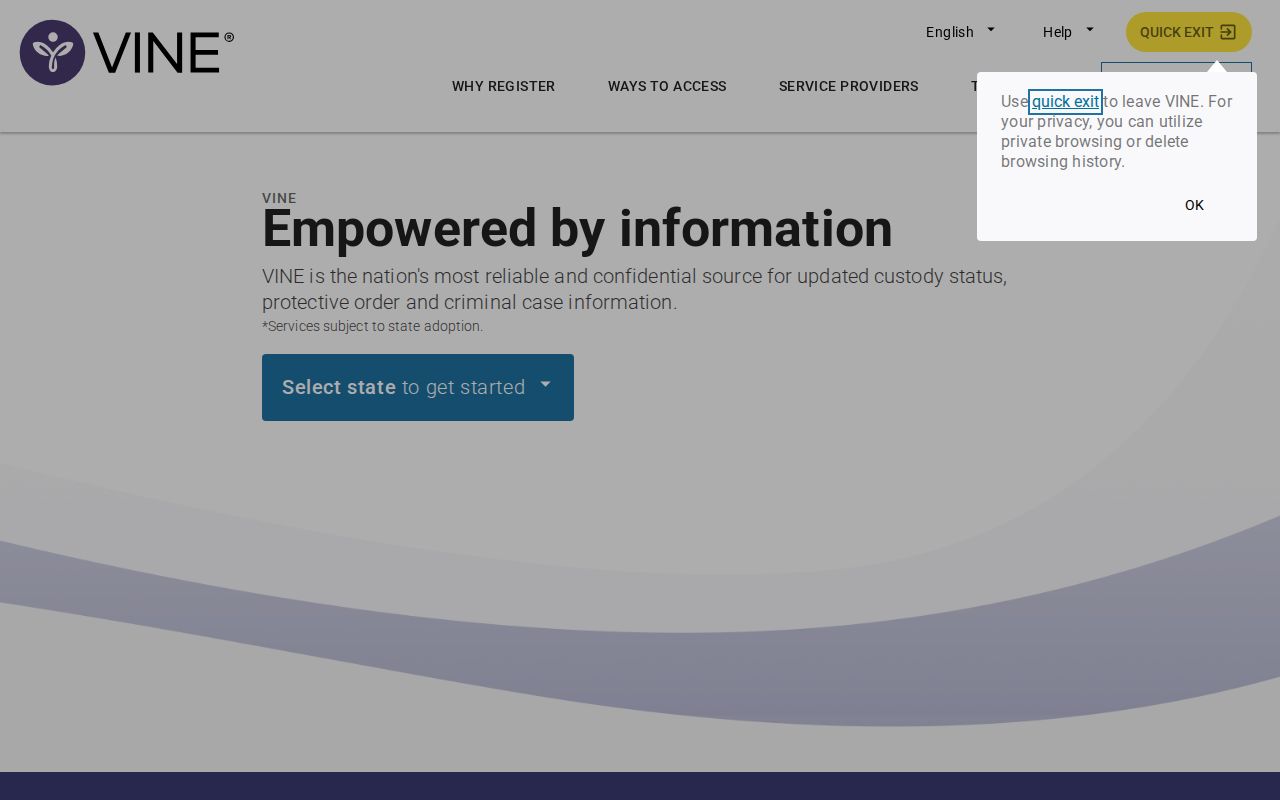
Pick West Virginia's system first, not a federal one.
What VINELink Shows After an Arrest
VINE results center on custody. A record may show a name, offender ID, and facility. Custody status and notification options appear as well. Read every field as of the displayed update. The live interface and the record decide what appears. VINE also makes no call on who owns or may release a booking photograph.
| VINE information | What it means |
|---|---|
| Identity fields | Details used to distinguish people with similar names. |
| Custody status | The status reported to VINE by the participating corrections system. |
| Facility | The reported location after entry by the receiving facility. |
| Offender identifier | A system identifier that can improve later checks. |
| Notification option | A route to register for qualifying status changes. |
These labels are not interchangeable. The sheriff PDF says processed. RJA may say admitted while VINE later shows a custody change, so save the URL, date checked, facility, and exact status instead of stretching one result into a broad conclusion.
How to Register for Custody Alerts
Open the correct record first. Then choose the notification option and follow the prompts. West Virginia DCR points users to VINELink for email registration. Telephone access and automatic phone notification run through 1-866-WV4-VINE. Expect to provide a phone number or email plus a personal identification number. Keep the PIN private, since it can confirm receipt or manage the registration.
- Confirm the person and facility before selecting the notification control.
- Choose an available phone or email method and enter current contact information.
- Create and safely store any requested PIN.
- Complete the confirmation step shown by the service.
- Update the registration if a phone number or email address changes.
The DCR page explains a caveat. A move may not trigger notice until the new facility enters the person. That caveat matters. VINE helps monitor custody. It should not be the only source during an active transport or release. Call the official service or facility when safety planning depends on current information. The West Virginia DCR VINE instructions list the phone service and the transfer caveat.
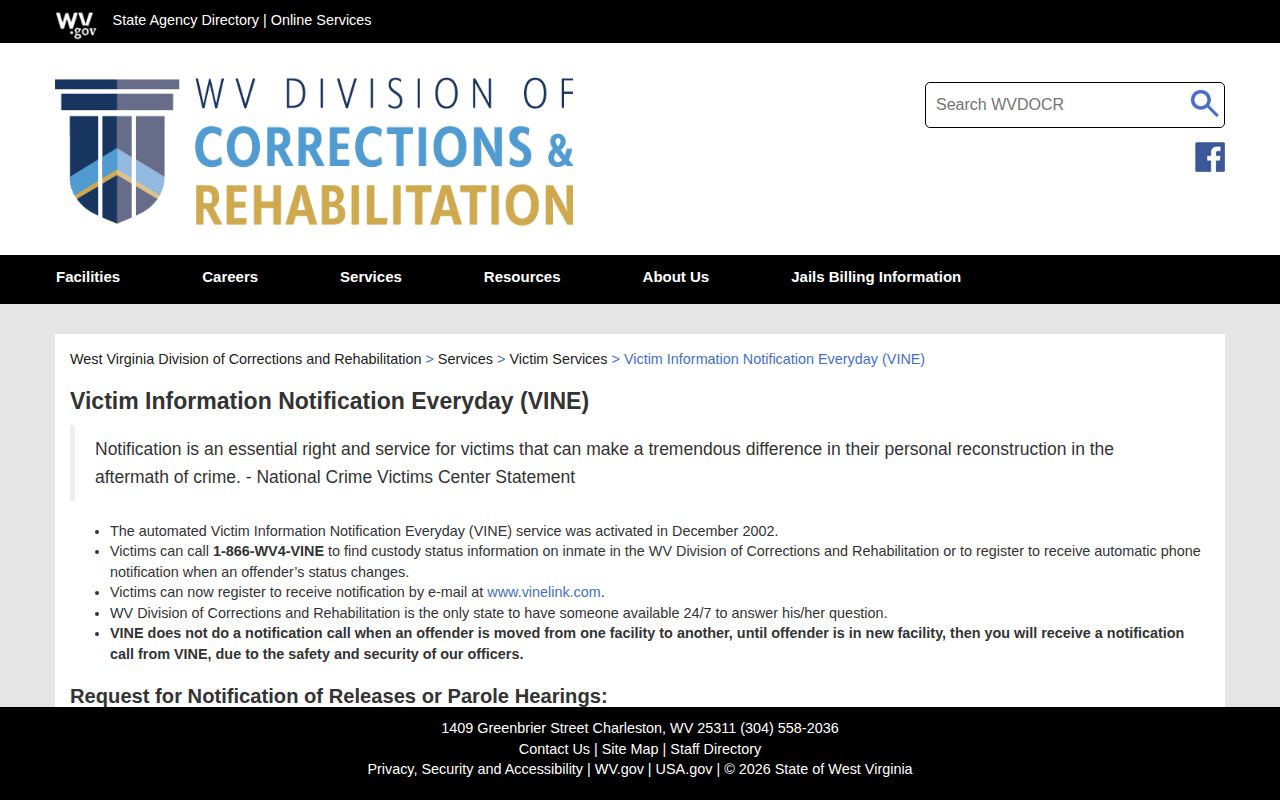
The DCR instructions remain the best current source.
Why NCRJ Entry Can Lag
Arrest location and custody location are often different in Monongalia County. A Morgantown or campus officer may finish booking locally. Transport to North Central Regional Jail comes after. One Morgantown police release described a person as processed and awaiting transport to NCRJ. During that gap, the city notice exists before the jail has entered data that reaches RJA or VINE.
A lag is not proof of a false report. It also gives no basis to guess a release. Check the time on the city or sheriff record, allow for transport and booking, and then use the state systems. If nothing appears, contact the official facility rather than repeating searches on unofficial pages. Record the status as unknown until the responsible custodian confirms it.
Delays do not end at admission. A transfer can create a second gap. DCR explains that notice of a move may wait until the new facility enters the person. Other events change the right source too. A release, bond order, court remand, state-prison transfer, or federal hold can each shift custody to a different system. RJA covers regional jail supervision. The DCR prison search covers sentenced state custody. BOP and ICE each cover their own federal scopes.
Written release or parole notice under the state process goes to both DCR and the Parole Board, a formal route far removed from ordinary VINE registration. For any specific statutory notice right, follow the most current official DCR instructions.
VINELink Limits and How to Confirm
VINE can run behind on a fresh NCRJ admission, a transfer, or a release. The West Virginia DCR says as much itself. Notice of a move only goes out once the new facility enters it. So when timing matters, double-check through other channels. Match it against the Monongalia County same-day report path, run an RJA search, and call NCRJ at (304) 873-1384. Even RJA cautions that public data may lag the true location, status, or release.
Treat VINE as an alert tool, not a promise. For urgent custody facts, call the jail or DCR directly.
VINE also leaves the courtroom out of the picture. Bond, charge changes, pleas, dismissals, acquittals, and convictions all live in the West Virginia magistrate or circuit case file. A release from custody does not close a case, and ongoing detention settles nothing about it.
Federal and immigration custody sit on entirely different systems. The Bureau of Prisons locator handles federal inmates. ICE runs its own Online Detainee Locator. The DHS portal shows the separate immigration-related service, and it should not be mistaken for West Virginia's state-jail path at VINELink. Because NCRJ can hold federal detainees under contract, confirm the custody authority before picking a locator.
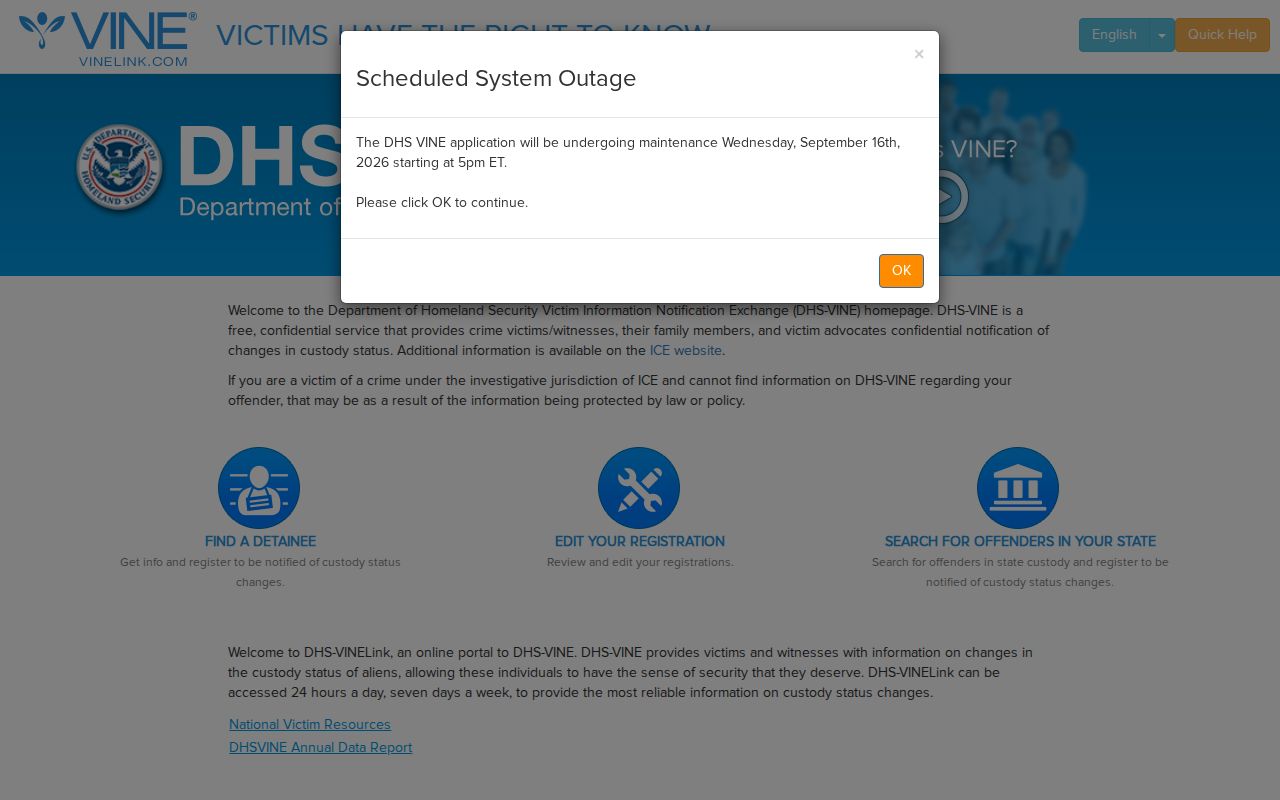
That split interface is a good reminder: any NCRJ custody search should start with West Virginia's own VINE deployment.